
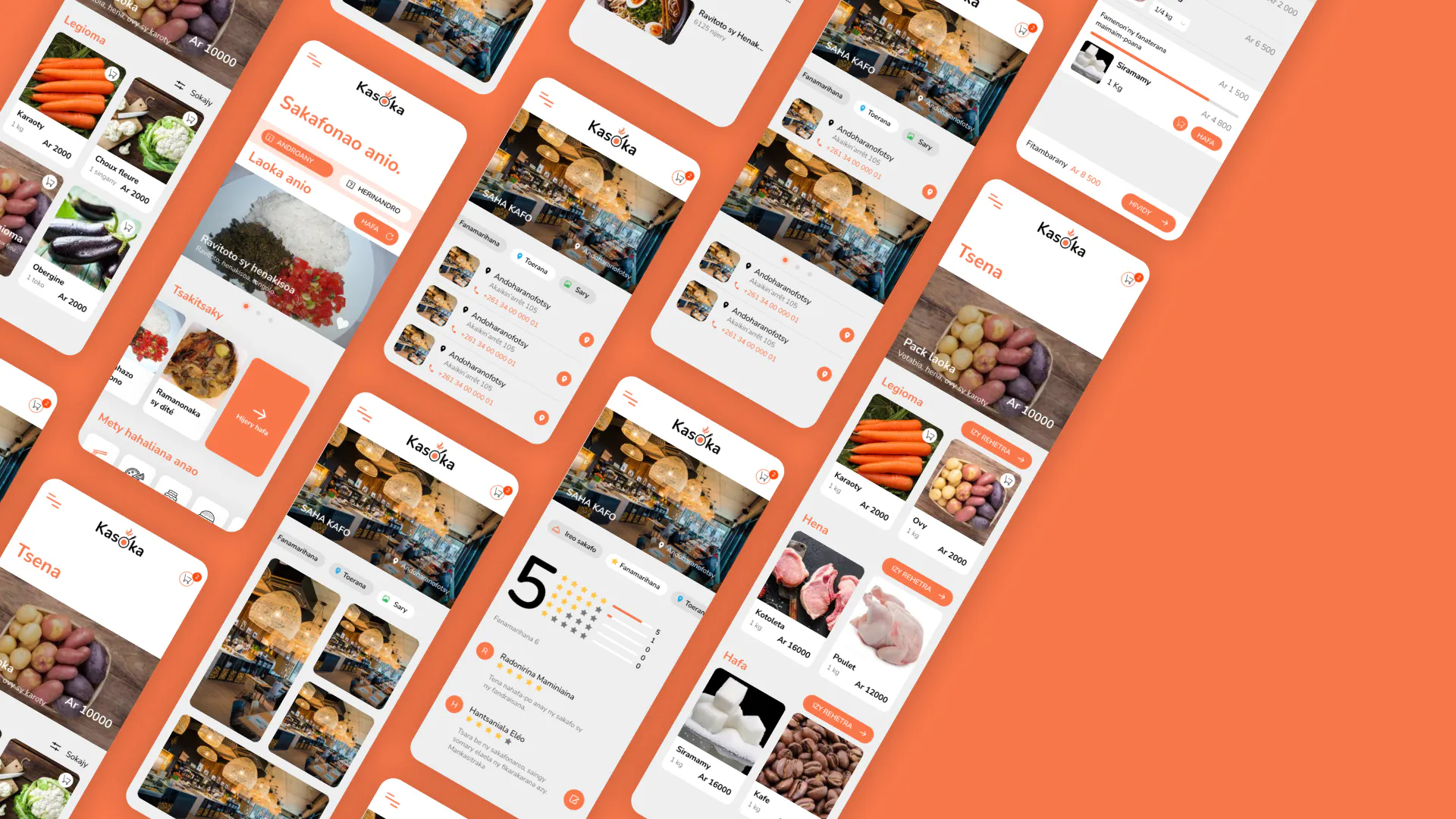
Kasoka Mobile app
Kasoka is a mobile application designed for Malagasy households, helping users easily choose the dish (laoka) of the day.
UX / UI Design • Development

With over 90% of users accessing the web via mobile devices, mobile applications are essential for businesses.
At SAHA Technology, we develop high-quality mobile applications for iOS and Android, allowing your audience to stay connected wherever they are.
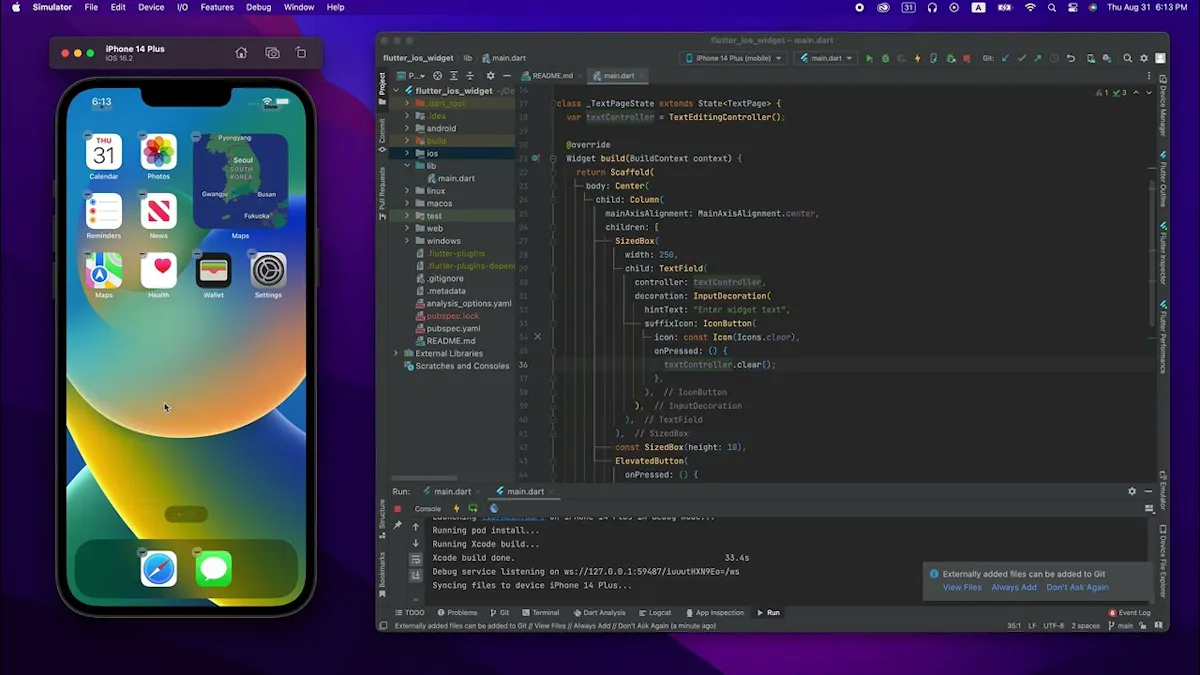
Mobile development refers to the creation of applications designed to run on smartphones and tablets (iOS, Android). It caters for the specific uses of mobile: touchscreen, geolocation, camera, push notifications.
With the dominance of mobile-first, Google favours experiences optimised for mobile. A high-performing app boosts user engagement and retention rate, which are positive signals for search rankings (notably via app indexing).

Native applications: Developed specifically for each platform with Swift (iOS) or Kotlin/Java (Android). They provide maximum performance and full access to device features. Ideal for a premium user experience.
Hybrid applications: Written with web technologies (HTML, CSS, JavaScript), then "wrapped" in a native container (using Capacitor or Cordova). They allow rapid development and a single code base.
Cross-platform: Frameworks like React Native, Flutter or Xamarin allow you to target both iOS and Android with a single codebase. They combine native-level performance and productivity, reducing development costs.

React Native (JavaScript/TypeScript): Based on React, it allows you to create natively rendered applications. Widely used for its performance and large community.
Flutter (Dart): Google's framework offering lightning-fast rendering and highly customisable user interfaces. Ideal for applications featuring polished, consistent design across all platforms.
Swift (iOS) and Kotlin (Android): The native languages recommended by Apple and Google. They guarantee perfect integration with the ecosystem and an optimal user experience.
Supplementary tools: Firebase (backend, analytics, notifications), Figma (UI/UX design), Xcode/Android Studio (development environments).

Mobile performance: Loading speed, fluidity and battery consumption are crucial. An optimised app improves Core Web Vitals (for mobile web) and reduces the uninstall rate.
App Store Optimisation (ASO): The equivalent of SEO for app stores. This includes the title, description, keywords, icons and reviews. Good ASO increases visibility on the App Store and Google Play.
User Experience (Mobile UX): Thumb-friendly navigation, readability, accessibility. Careful UX promotes retention and positive reviews, positively influencing app store rankings.
Apps and web SEO: Progressive Web Apps (PWA) combine the best of web and mobile: installable, fast, and indexed by Google. They offer a lightweight alternative to native apps with strong SEO impact.
 Flutter
 React Native
 Swift
Swift Kotlin
Kasoka is a mobile application designed for Malagasy households, helping users easily choose the dish (laoka) of the day.
UX / UI Design • Development


